

A Journey into the Vastness of Space
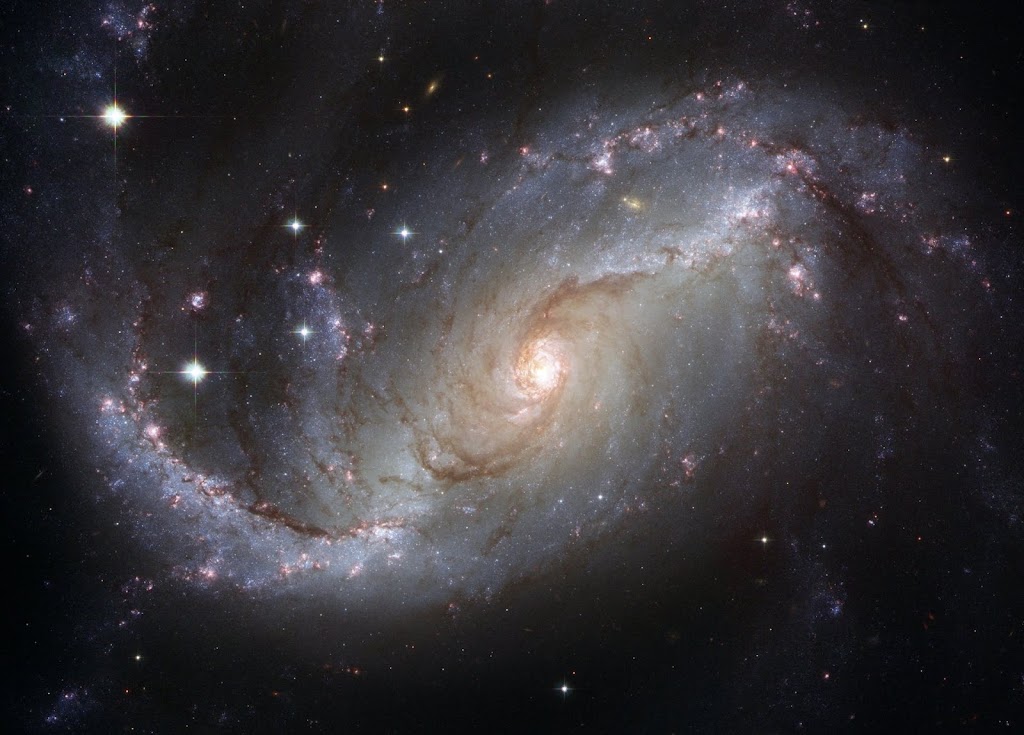
The universe, with its vast expanse and unfathomable mysteries, has fascinated humanity for millennia. From ancient civilizations that gazed at the stars in wonder to the cutting-edge space exploration of the modern era, the concept of space has been at the forefront of human curiosity. In this article, we will embark on a journey into the infinite cosmos, delving into the marvels of space, its exploration, and the profound questions it raises about our existence and the nature of the universe.
The Vastness of Space
Space, often referred to as the cosmos, is the vast expanse that surrounds us, extending far beyond the confines of our home planet, Earth. It is a realm where the ordinary rules of physics and reality seem to transform into something beyond our comprehension. The numbers alone are staggering: the observable universe spans more than 93 billion light-years in diameter, containing countless galaxies, stars, planets, and other celestial bodies. The sheer enormity of space challenges our understanding and sparks our imagination.
Galaxies and Stars
At the heart of the cosmos lie galaxies, immense collections of stars, gas, and dust bound together by gravity. The Milky Way, our home galaxy, is just one of billions in the observable universe. Each galaxy can contain hundreds of billions to trillions of stars, and innumerable planets. One of the most mind-boggling aspects of space is that there are more stars in the universe than grains of sand on all the beaches of Earth combined.
The life cycles of stars are equally fascinating. Stars form from vast clouds of gas and dust, and over millions or even billions of years, they undergo a series of transformations, eventually leading to their demise. Our own Sun, a relatively small and average star, is about 4.6 billion years old and has several billion more years of life ahead of it. Larger stars, on the other hand, can explode in spectacular supernovae, seeding the cosmos with heavy elements that are crucial for the formation of planets and life.
Planets and Moons
In addition to stars, space is home to an array of celestial bodies, including planets and their moons. Our solar system, a tiny fraction of the cosmos, offers an excellent window into the diversity and complexity of these objects. From the rocky inner planets like Mercury, Venus, Earth, and Mars, to the gas giants of Jupiter and Saturn, and the ice giants of Uranus and Neptune, each planet has its unique characteristics and mysteries.
Moons, which orbit planets, come in various sizes and shapes. Earth’s moon, for example, has long captivated humanity, serving as a source of inspiration and a platform for scientific exploration. Other moons in our solar system, like Jupiter’s moon Europa and Saturn’s moon Titan, have shown potential as places where life could exist or where future human missions might take place.
Space Exploration
Humans have always been driven to explore, and space is no exception. The history of space exploration is marked by remarkable milestones, and it continues to push the boundaries of our knowledge and capabilities. Here are some key developments in our journey into space:
1. The Space Race: The mid-20th century witnessed the intense competition between the United States and the Soviet Union known as the Space Race. This rivalry led to monumental achievements, such as the launch of the first artificial satellite, Sputnik 1, by the Soviet Union in 1957, and the landing of the first humans on the Moon during NASA’s Apollo program in 1969.
2. Space Telescopes: Space telescopes like the Hubble Space Telescope have provided unparalleled views of distant galaxies and revealed the beauty and complexity of our universe. They have significantly expanded our understanding of space and continue to make groundbreaking discoveries.
3. Planetary Exploration: Robotic missions, such as the Mars rovers and spacecraft like Cassini-Huygens that explored Saturn and its moons, have provided us with detailed insights into other worlds. These missions have discovered evidence of water, organic molecules, and even potential habitability on places like Mars and Saturn’s moon Enceladus.
4. International Cooperation: Today, space exploration is marked by international cooperation. Projects like the International Space Station (ISS), a space laboratory orbiting Earth, involve astronauts and scientists from multiple countries working together for the advancement of science and technology.
5. Private Space Industry: The emergence of private companies like SpaceX, Blue Origin, and Virgin Galactic has transformed space exploration. These companies are working on reducing the cost of access to space, developing new technologies, and enabling commercial space travel.
Deep Space Mysteries
While we have made significant progress in exploring space, we have only scratched the surface of its mysteries. The cosmos is full of phenomena that challenge our understanding and inspire further exploration.
1. Dark Matter and Dark Energy: About 95% of the universe is composed of dark matter and dark energy, substances that we cannot directly observe but that have a profound influence on the cosmos. Understanding the nature of these enigmatic components is one of the most pressing challenges in astrophysics.
2. Black Holes: Black holes, regions of space where gravity is so intense that nothing, not even light, can escape, are still a subject of fascination and inquiry. The recent imaging of the supermassive black hole in the center of the galaxy M87 was a groundbreaking achievement.
3. Exoplanets: The search for exoplanets – planets that orbit stars other than our Sun – has revealed a wealth of diverse worlds. Some of these exoplanets are in the habitable zone, where conditions might be suitable for life. The quest to find signs of extraterrestrial life continues.
4. The Big Bang: The origin of the universe itself is a central question in cosmology. The Big Bang theory, which suggests that the universe began as a singularity around 13.8 billion years ago, is currently the leading explanation for the universe’s birth.
Philosophical Implications
Space exploration not only broadens our scientific knowledge but also has profound philosophical implications. It forces us to contemplate our place in the universe and grapple with questions about the nature of existence, the possibility of extraterrestrial life, and the future of humanity.
1. The Fermi Paradox: The Fermi Paradox raises the question of why, given the vast number of potentially habitable planets in the universe, we have not yet detected any clear signs of extraterrestrial civilizations. This paradox challenges our understanding of the likelihood of intelligent life elsewhere in the cosmos.
2. Existential Threats: The study of space has highlighted the potential existential threats to our species, such as asteroid impacts and gamma-ray bursts. As a result, efforts are being made to develop strategies for planetary defense and to establish a human presence on other celestial bodies, such as Mars.
3. Cosmic Insignificance: The vastness of space can evoke feelings of cosmic insignificance, as we realize that Earth is just a tiny speck in an immense universe. This can be both humbling and thought-provoking, raising questions about our place in the grand cosmic scheme.
Conclusion
Space is a realm of endless wonder and fascination. It challenges our understanding of the universe, encourages us to explore the unknown, and forces us to confront profound questions about our existence and our place in the cosmos. As we continue to push the boundaries of space exploration, we gain new insights into the mysteries of the universe, and perhaps, in time, we will find answers to some