

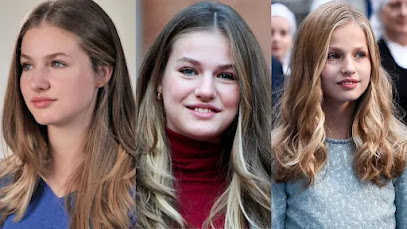
Princess Leonor of Spain, whose full name is Leonor de Todos los Santos de Borbón y Ortiz, was born on October 31, 2005, in Madrid. She is the elder daughter of King Felipe VI and Queen Letizia of Spain, making her the heir presumptive to the Spanish throne. Princess Leonor’s life is a fascinating blend of tradition, responsibility, education, and preparation for a future as Spain’s queen. In this comprehensive exploration, we will delve into various aspects of her life, her family, her education, her role as the heir to the throne, and her historical significance.

**Family and Lineage:**
Princess Leonor’s family is deeply intertwined with the history and tradition of the Spanish monarchy. Her father, King Felipe VI, ascended to the throne in June 2014 after the abdication of his father, King Juan Carlos I. King Felipe VI’s reign marked a generational transition in the Spanish monarchy, and Princess Leonor’s position as the heir reflects this transition.
Her mother, Queen Letizia, brought a unique aspect to the Spanish royal family. Prior to her marriage to King Felipe VI, Queen Letizia was a commoner and had a successful career as a journalist and news anchor. Her background underscores the changing nature of European monarchies, which have increasingly embraced marriages with commoners and individuals from diverse professional backgrounds.
Princess Leonor also has a younger sister, Infanta Sofia, who was born on April 29, 2007. The bond between the sisters is an essential aspect of their upbringing and preparation for their respective roles in the future of the Spanish monarchy.
On her paternal side, Princess Leonor is the granddaughter of King Juan Carlos I and Queen Sofia, who reigned over Spain during a period of significant political and social change. King Juan Carlos played a pivotal role in Spain’s transition to democracy following the Franco era.
**Heir to the Spanish Throne:**
Princess Leonor’s most prominent role and responsibility is her position as the heir presumptive to the Spanish throne. Her birth was historically significant because it came after a change in the Spanish Constitution that altered the laws of succession to prioritize birth order over gender. This change eliminated the earlier preference for male heirs and ensured gender equality in the line of succession. As a result, Princess Leonor is the eldest child and daughter of King Felipe VI, making her the heir apparent to the Spanish throne, irrespective of gender.
This shift in succession laws was a significant step toward gender equality in Spain and is in line with modern monarchies’ efforts to adapt to evolving societal norms and values. Princess Leonor’s future reign as queen will, therefore, mark a continuation of Spain’s commitment to these principles.
**Education and Development:**
Education is a crucial aspect of Princess Leonor’s life. As a young member of the Spanish royal family, her education is designed to equip her with the knowledge and skills needed for her future role as queen. She began her formal education in Madrid and has continued her studies with a well-rounded curriculum.
One notable aspect of Princess Leonor’s education is her time spent studying abroad in Wales. This experience allowed her to immerse herself in a different culture and improve her English language skills. In a globalized world, proficiency in multiple languages is a valuable asset for anyone in a position of international representation, as she is destined to be.
Princess Leonor’s education also includes a broad range of subjects, including history, politics, and the arts, all of which are essential for understanding the historical and cultural contexts of Spain, as well as for performing her duties as a future monarch.
**Official Duties and Public Life:**
While Princess Leonor is still in the early stages of her life, she has already begun to assume official duties and represent the Spanish royal family. As the heir to the throne, she attends various events, ceremonies, and engagements, both in Spain and abroad, signifying the gradual transition to a more public role.
Her presence at these events symbolizes continuity and the future of the Spanish monarchy. Her participation in state functions and international visits fosters diplomatic and cultural ties, reinforcing Spain’s role on the global stage.
Princess Leonor’s burgeoning role mirrors the gradual process of royal heirs preparing for their eventual reign. This preparation allows her to acquire the skills and experience needed to be an effective and respected monarch in the future.
**Historical Significance:**
Princess Leonor’s position as the future queen carries significant historical and symbolic importance. The Spanish monarchy has a rich and complex history, marked by periods of great influence and others of reduced power. Spain’s transition to democracy and the reign of King Juan Carlos I played a pivotal role in the nation’s modern history. Princess Leonor’s future role as queen signifies a continuation of this tradition and legacy.
Her reign, when it occurs, will be situated in a modern Spain, characterized by democracy, pluralism, and a constitutional monarchy. Her role as a constitutional monarch is to uphold the constitution, represent the nation, and perform various ceremonial duties.
Furthermore, she is expected to continue the tradition of the Spanish monarchy as a unifying and stabilizing force in the nation, particularly in times of political or social change. The monarchy’s apolitical nature and focus on national unity are of paramount importance in Spain’s diverse political landscape.
**Conclusion:**
Princess Leonor of Spain embodies a unique blend of tradition, modernity, and responsibility. As the heir presumptive to the Spanish throne, her life is marked by an ongoing preparation for a future role that carries historical significance. Her education, family background, and early forays into official duties all contribute to her development as a future queen.
In the context of Spain’s rich history and evolving societal values, Princess Leonor’s position is a testament to the adaptability of monarchies and their ability to reflect the changing nature of their respective nations. Her reign, when it arrives, will be a crucial chapter in Spain’s history, and the nation will watch with anticipation as she assumes her role as queen and continues the legacy of the Spanish monarchy.